




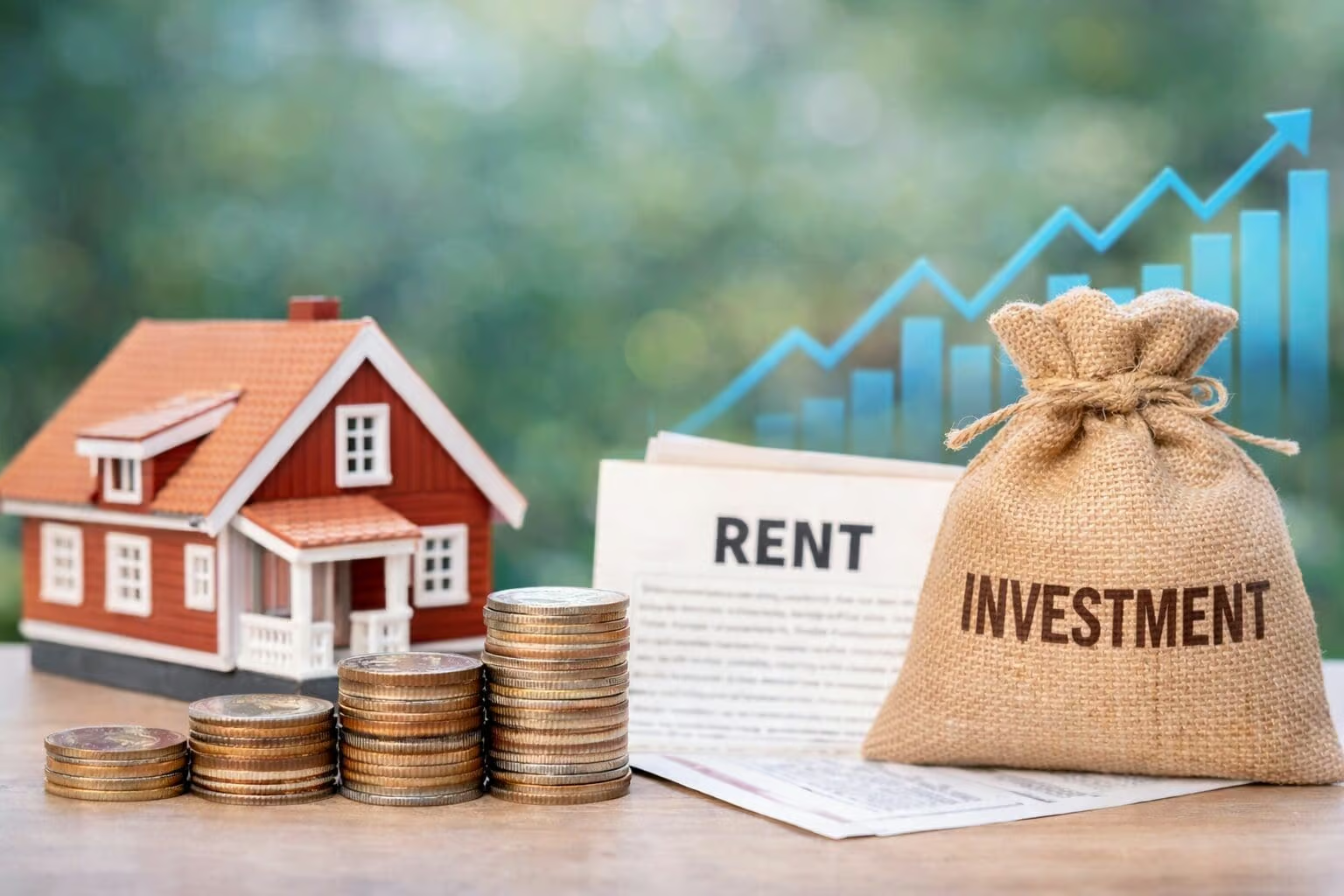
The buying versus renting question comes up in almost every conversation we have with clients. And in 2026, it feels more complicated than it used to.
Interest rates are higher than the ultra-low years many people remember, home prices remain strong in many areas, and renting can feel like the safer short-term decision. But here’s what I always encourage clients to focus on:
Your housing choice isn’t just about today’s payment. It’s about what you’re building over time.
For many households, homeownership remains one of the most accessible and reliable ways to build wealth, increase stability, and protect purchasing power. That doesn’t mean buying is always the right answer for everyone, but it’s important to understand why real estate continues to be considered one of the strongest long-term investments.
Are you ready to buy but not sure where to start? Read: The Ultimate Guide to Buying a Home in Alexandria
Renting: flexibility, simplicity, and fewer responsibilities
Renting can absolutely make sense, especially if:
- you plan to move in the next few years
- you want flexibility
- you’re prioritizing savings or debt reduction
- you’re still deciding where you want to settle long-term
Renting offers:
- predictable short-term expenses
- fewer repair and maintenance costs
- ease of moving when life changes
And for many people, that flexibility is worth it. For example, in some cases, renting might be better for people who are downsizing.
But renting also has one clear limitation:
Your monthly payment builds someone else’s equity, not yours.
Get more home-buying insights with these posts next:
- How Can Buying a Home Help You Save on Taxes?
- Creative Home Loans to Help You Buy a House
- Is a 40- or 50-Year Mortgage Right For You?
The hidden cost of renting: rent tends to rise over time
When you rent, your cost of housing isn’t locked. Even if rent increases slow in certain years, over time rent typically trends upward.
This is why many renters feel like they’re paying more each year without building anything long-term.
In recent years, rents rose significantly nationwide and in many local markets. While growth rates can shift year to year, the broader trend is that rent increases over time, and those increases compound. That can impact long-term savings and purchasing power in a way many renters do not anticipate early on.
Are you a first-time home buyer? Download our First-Time Home Buyers Guide for even more helpful advice.
Buying: a home is a place to live and a long-term asset
When you buy a home, your monthly payment becomes more than a cost. It becomes a structured way to build wealth and stability.
Homeownership allows you to build wealth through three main mechanisms:
1) Equity growth (forced savings)
Every mortgage payment includes principal. Over time, you pay down the loan and build equity in your home.
This is why homeownership is often described as a “forced savings plan.” Many homeowners build wealth simply because the mortgage structure requires them to consistently invest in an asset they own.
2) Appreciation (long-term value growth)
Real estate markets move in cycles, and there is never a guarantee of short-term appreciation. However, historically, home values have tended to rise over long time horizons.
That long-term appreciation is one of the reasons real estate is often used as a hedge against inflation and a way to build wealth steadily over time.
3) Stability and control
If you buy with a fixed-rate mortgage, you are locking in your principal and interest payment. Taxes and insurance can change, but the foundation of your housing payment becomes far more stable than rent.
For many homeowners, this stability becomes one of the most valuable benefits over time.
Do you have more questions about buying? Here are a few more posts you might find helpful:
- How to Negotiate as a Homebuyer?
- Should You Listen to Friends when it Comes to Real Estate?
- What to Expect When You Start Looking to Buy a House
Why real estate is one of the most accessible investments
Most people think of investing as something you do with extra money. Real estate is different.
Real estate is one of the few investments that:
- meets an essential need (housing)
- can be purchased using leverage (you control a large asset with a smaller down payment)
- allows for long-term appreciation
- builds equity through monthly payments
- often provides tax advantages depending on your situation
It is not the only way to build wealth, but it is one of the most accessible for many households because it doesn’t require additional monthly investing beyond a housing payment you already need to make.
But what about interest rates?
This is the question we hear the most in 2026.
Higher rates can absolutely impact affordability and monthly payments. But here is what I often remind clients:
A rate can change. A great home in a great location is harder to replace.
If rates come down in the future, refinancing may be an option. But the opportunity to buy the right home at the right time is market-dependent, and inventory is often limited in many Northern Virginia and DC-area neighborhoods.
The right decision depends on your timeline and your financial comfort, but rates alone should not be the only factor in the conversation.
Read more about what to expect from the DC Metro real estate market this year, or stay up-to-date by subscribing to our newsletter.
When buying tends to make sense (and when it doesn’t)
Buying is often a better move when:
- you plan to stay at least 3 to 5 years
- you want stability and long-term equity growth
- you have stable income and reserves
- you are ready to take on ownership responsibilities
- you want more control over your home and costs
Renting can be the better choice when:
- you may relocate soon
- you’re prioritizing flexibility
- you’re rebuilding savings or paying down debt
- you’re still deciding where you want to settle
- you’re waiting for a major life transition
The best decision is not emotional. It’s informed and aligned with your timeline and goals.
If you want to buy in the future, start preparing now
Even if buying isn’t right for you today, you can set yourself up for success.
A few smart steps:
- understand your credit score and what impacts it
- build savings for down payment and reserves
- reduce high-interest debt where possible
- talk with a lender early to understand your options
- keep an eye on neighborhoods you like so you understand pricing and inventory
A little preparation now gives you far more options later.
Final Thought
Renting can be a smart choice for flexibility. But for many households, buying remains one of the strongest long-term investments because it allows you to build equity, stabilize housing costs, and create long-term financial security.
If you’re weighing buying versus renting and want to talk through what makes sense for your specific situation, we’re happy to help. The right plan should feel clear, realistic, and aligned with your goals.
Sue Goodhart | sue@thegoodhartgroup.com
Allison Goodhart DuShuttle | allison@thegoodhartgroup.com
Phone: 703-362-3221
Looking for more real estate insights and the latest listings delivered right to your inbox? Sign up for our newsletter right here.
Newsletter Signup
"*" indicates required fields
Looking For Additional Resources?
We’ve got you covered. Click the button below to download our lifestyle, real estate, and area guides.