

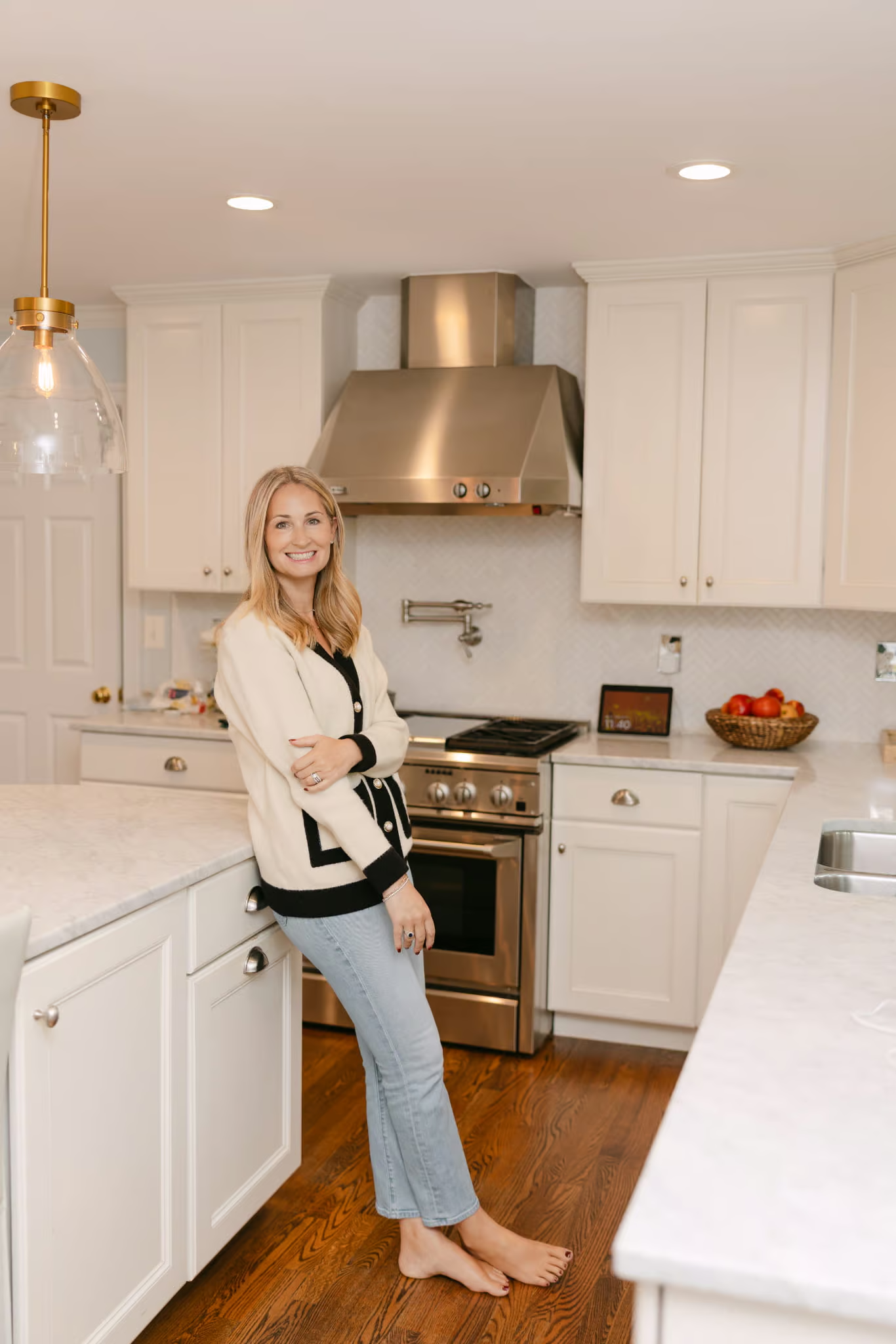
A year ago, if you told me I’d be growing broccoli sprouts in my kitchen, eating purple sweet potatoes, and getting excited about an electric tea kettle, I probably would have laughed.
But here we are!
After my breast cancer diagnosis earlier this year, I started looking at my health and my kitchen a little differently. Not because I think something I ate or used caused my cancer, but because I wanted to focus on the everyday choices I could control.
And as I started researching, I realized there were quite a few things worth reconsidering, from the cookware and food-storage containers we use to what we’re eating and how we prepare it.
As a real estate agent, I’ve spent years thinking about what makes a great kitchen. But lately, I’ve been looking at mine through a different lens. Less about how it looks and more about how it functions and supports our everyday lives.
One thing I’ve learned throughout this experience is that health decisions are incredibly personal. What matters to one person might not be a priority for someone else, and that’s okay. I’m sharing what’s been working for me, not suggesting everyone needs to make the same changes.
Here’s what I’ve changed so far, what’s been surprisingly easy, and a few ideas you might want to try yourself. No pressure!
Rethinking What Touches Our Food
I’d always thought about plastic mostly in terms of its environmental impact. I hadn’t given nearly as much thought to how certain materials might interact with our food, especially when heat is involved.
We’ve replaced our old plastic food-storage containers and cutting boards. We also changed our coffee maker and hot-water appliances because I wanted to reduce how much hot water comes into contact with plastic components.
And I have to say, I’m loving my new electric tea kettle. Who knew I’d get so excited about a kettle? It’s the little things!
We’ve added a cast-iron skillet and are using our stainless steel pots and pans more often. I still have a few older nonstick pieces to replace that we don’t use often, but we’re getting there.
Another change has been how we heat food. We used to rely quite a bit on those microwaveable bags of vegetables and rice. Now we’re more likely to cook fresh vegetables on the stove or transfer food into a suitable container before heating.
Here’s what’s funny: I never would have microwaved food in a plastic bowl or Tupperware container, but somehow I never thought twice about those bags! It says to microwave them! Or ordering delivery and getting hot food in a plastic container. Yikes!
Frozen vegetables can still be a great option. I’ve just become more conscious of how I cook them.
There’s still a lot we don’t know about microplastics and their long-term health effects, but these are changes that feel reasonable to me.
Try this: Take a look at the containers and appliances you use most often, especially when heating food or liquids, like in many single-serve coffee makers. Switching to glass or other heat-safe containers can be a manageable first step.
Thinking Beyond the Food: Air, Water, and Everyday Products
I’ve also started paying more attention to things we don’t necessarily see, like the air we’re breathing, the water we’re drinking, and the cleaning products we’re using.
Cooking ventilation is a big one.
Cooking releases particles and other pollutants into the air. I’ve learned that it’s important to use the range hood regularly, ideally one that vents outside rather than just recirculating the air.
And apparently, we’re supposed to clean those grease filters, too!
Try this: Check whether your range hood vents outside, use it when cooking, and make sure you’re cleaning the filters regularly. The EPA has helpful information about improving indoor air quality while cooking, and we’ve included more appliance maintenance reminders in our Homeowner Maintenance Checklist.
Water has been another area I’ve been looking into.
I’ve started using glass water bottles more often instead of disposable plastic ones or relying on filtered water from the fridge. I recently ordered a new filtration system for our tap water. It’s more involved than the pitcher filters we’ve used before, although we literally just got it, so I can’t give it a review yet!
One thing I’ve learned is that not all filters remove the same things. Before investing in one, check what’s in your local water, what the filter is certified to remove, and how often it needs to be replaced. The EPA’s drinking water resources are a good starting point.
Cleaning products have been another change. I’ve replaced our regular brand-name dish soap, dishwasher detergent, and hand soap with alternatives whose ingredients I’m more comfortable with.
I’ve also learned that words like “natural,” “clear,” “unscented,” and “non-toxic” don’t necessarily tell you much. I’ve been paying more attention to ingredients, fragrances, and certifications like the EPA Safer Choice program.
Some things I changed right away, but others I’m swapping out as we finish what we already have. No need to throw away an entire cabinet of products overnight!
Read more about healthy living at home with these posts next:
- Rethinking Healthy Living, Starting at Home
- The Ultimate Home Maintenance Checklist: What To Do Each Season
Focusing on What I’m Adding, Not Taking Away
Before this year, I rarely ate breakfast during the week. I was usually running around, so lunch was takeout pretty much every day.
And if I turned on the oven, there was a pretty good chance it was to bake cookies.
Things have changed a bit!
One of the biggest shifts I’ve made is focusing on what I want to eat more of, rather than everything I’m “not supposed” to eat.
As I’ve been researching nutrition, cancer prevention, and overall health, I keep seeing many of the same foods and nutrients come up. Fiber, protein, beans and legumes, cruciferous vegetables, omega-3 fatty acids, colorful plant foods, and fermented foods.
So instead of trying to follow some complicated diet, I’ve been looking for ways to incorporate more of those things into what I already eat.
Beans and legumes have become an easy way to add fiber and plant-based protein. I’m eating more fish like wild-caught salmon and sardines for their protein and omega-3s, and more colorful vegetables like purple sweet potatoes.
The American Cancer Society’s nutrition guidelines emphasize eating a variety of vegetables, fruits, whole grains, and other plant foods. Research supports the benefits of these overall eating patterns, although the evidence around individual foods and compounds is still evolving.
I’ve also become interested in gut health and the microbiome. We almost always have Greek yogurt, sourdough bread, and either sauerkraut or kimchi on hand now. Some fermented foods contain live cultures that may support gut health, although not all fermented foods have the same benefits. It’s another area where I’m learning as I go!
I’ve also been trying to eat 30 different plants each week. That sounds ridiculously hard at first, but it includes fruits, vegetables, beans, whole grains, nuts, seeds, and even herbs. I’ve seen that number pop up in several places, and it seems like a good goal for encouraging variety. I’m absolutely not keeping count, but it reminds me to add little things wherever I can.
Now I keep rinsed beans ready to go in the fridge, along with arugula, so it’s easy to add them to whatever I’m eating. Arugula to a sandwich? Beans to a salad? Broccoli sprouts on just about anything? Those little additions add up!
Try this: Keep a few easy additions ready in your fridge. Rinsed beans, washed greens, or hard-boiled eggs for a quick protein-packed snack or salad topping. When they’re already prepared, it’s so much easier to make a nutritious choice without giving it much thought.
And we’ve even started growing our own broccoli sprouts! I didn’t see that coming either.
We bought a countertop sprouting system, and it’s surprisingly easy. Broccoli sprouts contain compounds that can produce sulforaphane, which researchers are studying for potential health benefits, including possible effects related to cancer biology. That doesn’t mean eating them prevents cancer, but I find the research interesting. Raw sprouts can also carry harmful bacteria, even when grown at home, so food safety matters here, too.
My overnight oats have become one of my favorite easy breakfasts. I make them with Greek yogurt, almond milk, oats, chia or flaxseed, protein powder, and fruit. I’m getting protein, fiber, and several different plant foods before I’ve even started my day.
I’m happy to share my recipe if anyone wants it!
I’m eating fewer highly processed foods than I used to, but I haven’t eliminated everything I love. Chips on the beach with a cold glass of Sauv B? Sorry, that’s not going anywhere! We still enjoy eating out (probably too much), and I have absolutely zero interest in turning every meal into a nutritional calculation.
Speaking of wine, that’s been one of the bigger changes I’ve made. I’m not giving it up entirely. I still love a great glass of wine or cocktails when we’re out to dinner or at an event. But I’ve started keeping less alcohol in the house. I’ve realized that if there’s a bottle of wine sitting around, it’s a lot easier to pour a glass on a random Thursday night!
Given what I’ve learned about the connection between alcohol and breast cancer risk, cutting back feels worthwhile. And I’ll admit, this has probably been one of the harder changes to stick with consistently.
The goal isn’t perfection. It’s building habits that last and improving my overall health through lots of small choices.
Meal Prep Doesn’t Have to Be a Production
I used to watch influencers share their elaborate Sunday meal-prep routines and think, Who has time for all of that?
The chopping, blending, mixing, baking, transferring everything into perfectly organized containers, and then cleaning what seemed like every appliance in the kitchen.
It looked exhausting!
And when I actually tried meal prepping, I’d inevitably end up not eating everything I’d made. All that work, and then food went to waste.
So I’ve come up with a much simpler approach.
My number one rule: Keep it EASY.
Usually on Sunday, or Monday if we’ve had a busy weekend, I’ll prepare a protein like chicken or wild-caught salmon and roast a couple of vegetables.
Purple sweet potatoes and cruciferous vegetables are frequent favorites. I try to do everything on one sheet pan because the fewer dishes I have to wash, the better.
Then I use those ingredients in different ways over the next few days. Maybe a salad with arugula or romaine, a rice bowl using leftover rice from dinner, or a sandwich with whatever we have on hand.
I also keep things like sardines and avocados around for days when I want something different.
I don’t plan out exactly what I’m eating every day. My schedule changes too much, and I don’t want to feel obligated to eat something just because I decided on Sunday that it was Tuesday’s lunch.
Having a few things ready gives me options, cuts down on food waste, and has definitely reduced how much I’m spending on takeout.
Try this: If traditional meal prep feels overwhelming, start with just one protein and one vegetable. You’d be surprised how many meals you can make from those two things when you have some pantry staples.
My Meal-Prep Shortcut: Ask AI
Here’s something that’s made all of this even easier: I use ChatGPT to help me figure out what to make.
Sometimes I tell it what I’m craving. Other times, I just list whatever ingredients I have in the fridge.
I’ll ask for a simple sheet-pan recipe with exact instructions, cooking times, and the order to do everything so I can get it done as quickly as possible.
Here’s an example of what I might ask:
“I have chicken, purple sweet potatoes, and broccoli. Give me an easy sheet-pan meal-prep recipe with exact instructions, including oven temperature, how to cut and season everything, cooking times, and the order to do everything to make it as quick and easy as possible. Give me ideas for how to use it throughout the week, too.”
I’ll also ask for ideas when I have leftovers or random ingredients I don’t know what to do with.
I’m not trying to become a gourmet chef. I am FAR from it! I’m just trying to make eating well the easiest option on a busy Tuesday.
One practical note: Refrigerate prepared food promptly and generally use cooked leftovers within three to four days, freezing anything you won’t eat within that time.
Making It Work for the Whole Family
Of course, I’m not the only person eating in our house.
We’re gradually changing some of our family habits, too. We’re preparing more fresh foods, relying a little less on convenience products, and introducing more whole-food options for the boys.
I’m also trying to cut back on how often they eat processed meats like deli meats and hot dogs. But I’m not interested in banning every food the kids enjoy. We’re slowly working on adding in better foods and keeping fewer processed things on hand.
Edamame might be one of the only vegetables that all four of us like, so it’s on an almost daily rotation!
And don’t worry. The oven is still being used for cookies.
A Kitchen That Works for Real Life
I’ve spent my career helping people think about kitchens in terms of layouts, finishes, appliances, storage, and resale value. And those things still matter.
But now I’m also thinking about how a kitchen functions and influences our everyday habits.
Does the range hood vent outside? Is there enough counter space to comfortably prepare food? Enough storage for the things you use? Is the refrigerator organized so ingredients don’t disappear into the back until they’ve gone bad?
And what about the less glamorous things we don’t always notice during a showing, like moisture under the sink or whether appliances have been properly maintained?
None of these things necessarily makes or breaks a home purchase, but they’re worth considering when you’re buying, renovating, or just trying to make your current home work better.
And here’s the good news: you don’t need a beautifully renovated kitchen to make most of these changes.
Sometimes it’s as simple as reorganizing a cabinet, making room in the refrigerator for prepared food, maintaining your appliances, or improving ventilation.
A kitchen doesn’t just need to look good. It should make the way you want to live a little easier.
I’m not finished with my own kitchen reset. There are still products I’m researching, routines I’m experimenting with, and plenty more to learn.
But the biggest lesson so far has been pretty simple:
A healthier kitchen isn’t about making life more restrictive. It’s about making the choices that support your health easier to make.
Because a healthier home shouldn’t mean giving up everything you love.
A Healthier Home. A Fuller Life.
What’s one kitchen change you’ve made that stuck? I’d love to hear it. Get in touch today by filling out the form on this page or by emailing me directly at allison@thegoodhartgroup.com.
Looking For Additional Resources?
We’ve got you covered. Click the button below to download our lifestyle, real estate, and area guides.